Hong Kong JGW buyer attendance rises 4.5%, with demand still to be tested in orders
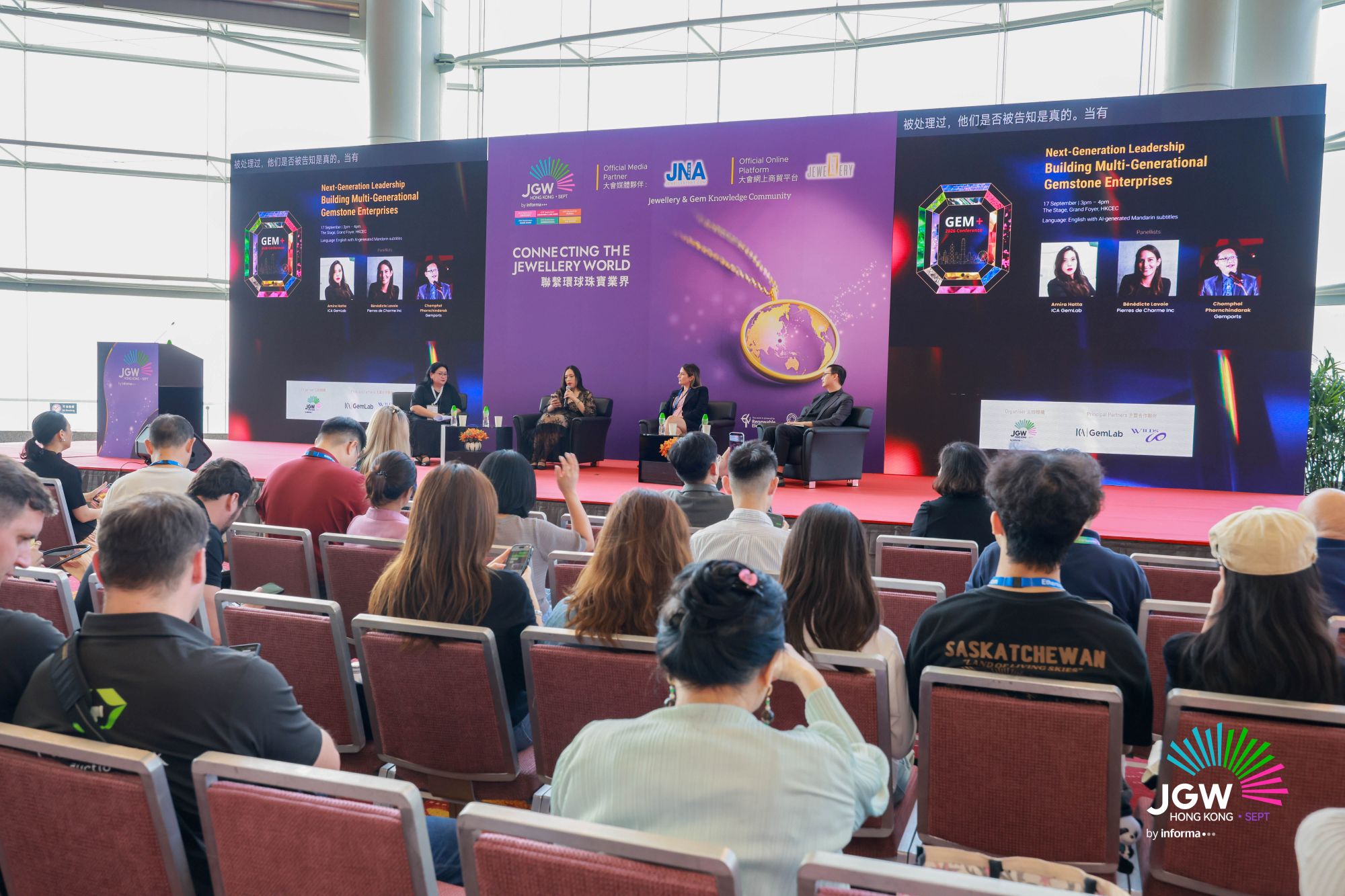 A GEM+ panel on next-generation leadership and multigenerational gemstone businesses during JGW September.Informa Markets Jewellery
JGW September 2026 recorded 57,632 unique buyers. Regional growth, inventory priorities and design discussions offer clues to sourcing activity, but attendance alone cannot establish stronger sales or a broad demand recovery.
What the attendance figure measures
Informa Markets Jewellery reported on September 21, 2026 that JGW September attracted 57,632 unique buyers from 149 countries and regions, up 4.5% on the previous edition. The fair ran at AsiaWorld-Expo on September 14–18 and the Hong Kong Convention and Exhibition Centre on September 16–20. Each buyer was counted once across the show, regardless of repeat visits, so the total measures individual participation rather than accumulated daily entries.
The organiser also reported approximately 3,000 exhibitors from 46 countries and regions across more than 40 themed pavilions. Bringing materials, finished jewellery and suppliers together gives buyers an opportunity to compare alternatives. The higher buyer count indicates that more participants committed time to those conversations. The release, however, provides no transaction value, leaving open how many enquiries became orders.
Read regional growth alongside the buyer mix
The geographical breakdown adds detail. According to the organiser, Hong Kong, mainland China and international markets each accounted for roughly one-third of buyers. Buyer numbers from mainland China increased 4.5% year on year, North America 24.2%, Europe 13.4% and Central Asia 42.2%. The approximate thirds describe the overall mix; the regional growth rates describe changes in attendance. They are not interchangeable percentages.
The 42.2% increase in buyers from Central Asia does not establish it as the largest sourcing market. Absolute regional counts, prior-year bases and regional order values were not disclosed. Exhibitors could use these figures alongside their own customer locations, the quality of enquiries and subsequent conversions to identify markets worth following. A single growth rate is too narrow a basis for changing sales priorities.
Follow sourcing choices through to inventory
The organiser’s management observed that buyers were prioritising stock they could sell relatively quickly, with some European and US buyers returning to the fair. This is an organiser’s account of activity on the floor, rather than an independent buyer survey. It raises a practical consideration: a product’s novelty needs to be assessed alongside its fit with existing price points, sales channels and replenishment schedules.
Retailers and suppliers could compare small trial orders, lead times and repeat-order terms, then use actual sales to assess the assortment. These are analytical implications of the show information, not purchasing behaviours established by the release. With no disclosed order sizes, sell-through rates or inventory days, a preference for readily saleable stock should not be presented as evidence that inventory turnover has already improved.
Turning design and technical ideas into business
The programme also addressed business questions beyond sourcing. GEM+ discussions covered Gen Z luxury consumption, social commerce and succession between generations. The fair featured entries from a gender-neutral coloured-gemstone jewellery design challenge and demonstrations of innovation in metalworking. These offer material for product development, production and customer communication, but attention to a topic does not establish sales growth for the associated designs.
The next question is whether meetings turn into sustained trade, and whether design and craft experiments enter assortments that can be sold and replenished. Company disclosures on orders, repeat buying and retail sales would help test those signals. For now, the 4.5% increase supports a finding of greater sourcing participation; the evidence is insufficient to conclude that industry demand has recovered across the board.
Related articles
 Jewel360 / The Centurion
Independent jewellers: social discovery, personal service
Read article McKinsey & Company / The Business of Fashion
Luxury clients in China and the US: what shapes demand
Read article De Beers Group