China H1 gold consumption: jewellery falls as bars and coins grow
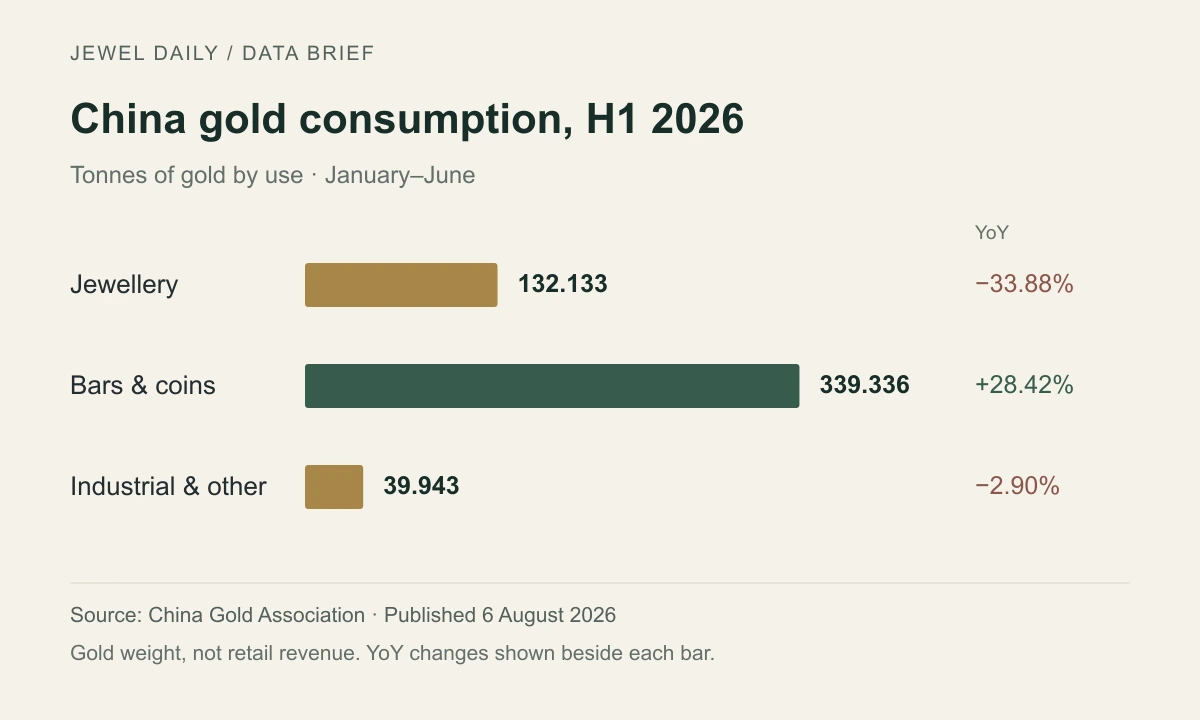 Source: China Gold Association · Published 6 August 2026。Gold weight, not retail revenue. YoY changes shown beside each bar.JEWEL DAILY
China Gold Association data show diverging uses of gold in H1 2026: jewellery consumption fell 33.88%, while bars and coins grew 28.42%. Our analysis separates gold weight, retail spending and inventory decisions.
Gold demand diverges by use
The China Gold Association released its H1 statistics on 6 August. Gold consumption in January–June 2026 reached 511.412 tonnes, up 1.23% year on year. Jewellery accounted for 132.133 tonnes, down 33.88%; bars and coins reached 339.336 tonnes, up 28.42%. These are measures of gold weight.
The association links the changing consumption mix to volatile, elevated gold prices and new gold tax policies. That is its market explanation, not a measurement of individual jewellers’ revenue, margins or footfall.
JEWEL DAILY perspective
Our interpretation is that retailers should distinguish demand for adornment from demand for investment products. Growth in total gold consumption alone provides little basis for adding jewellery inventory. Stronger bar sales do not establish a greater willingness to pay for design and craftsmanship.
A practical review would track sales value, gold weight sold, weight per piece and stock turnover by product and store. Whether lighter pieces or exchange services improve conversion needs evidence from the retailer’s own orders. National half-year data provide context; store-level replenishment still requires local evidence.
Related articles
Platinum jewellery in Q2 2026: demand weakens, with China central to the comparison
Read article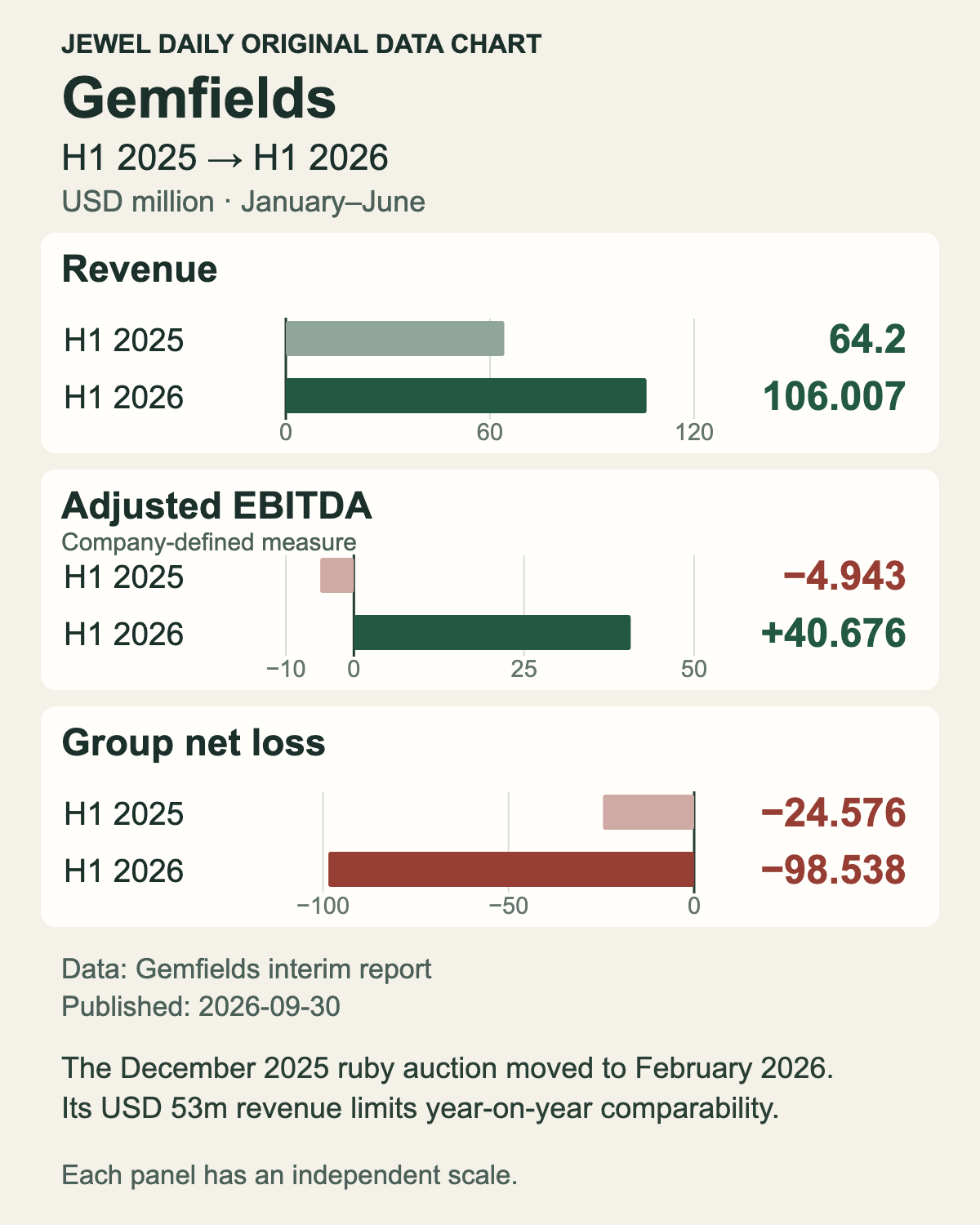 JEWEL DAILY
Gemfields H1 2026 revenue recovery comes with a USD 125.2 million MRM impairment
Read article Jewelers Board of Trade